

how to organize teen bedroom vanity storage for spring prom makeup kits before graduation
Our Top Picks
Affiliate disclosure: if you buy through these links, we may earn a commission at no extra cost to you.
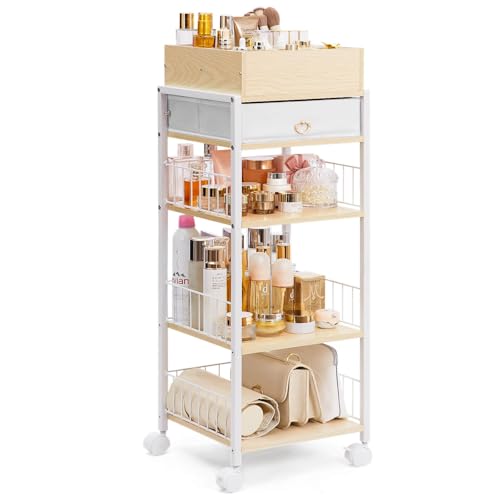
If you've got a teen who's heading to prom and graduation season is around the corner, you know the reality: a makeup collection that seemed manageable last year has somehow tripled, the bathroom counter isn't theirs anymore (thanks, siblings), and there's exactly three weeks to pull together a makeup look that actually works. This is the moment when a proper bedroom vanity setup stops being a nice-to-have and becomes essential. I've set up vanities for four teens now—across everything from 8x10 bedrooms to tiny corner nooks—and I've learned what actually gets used versus what looks pretty but sits empty.
The good news? You don't need to spend a fortune or sacrifice your entire bedroom floor plan. What you do need is a strategic approach: smart lighting that doesn't wash you out, storage that matches your actual makeup collection (not the one you wish you had), and a workspace that handles both your everyday 15-minute school routine and your 90-minute prom prep marathon. This guide walks you through exactly how to build a vanity system that works for graduation season and beyond.
Enthralite Makeup Storage Organizer for Bedroom: Make Up Holder with Drawer - Vanity Organization for Skincare Cosmetic Brush Beauty Accessories
$39.99Check price on AmazonTable of Contents
- Start with Your Space: Measure Before You Buy Anything
- Lighting is Everything—Here's How to Choose Lighted Mirrors That Actually Work
- The Vanity Desk: Finding the Right Size for Real Makeup Routines
- Storage Strategy: Acrylic Organizers, Drawers, and Mini Fridges That Match Your Collection
- The Prom-Prep Kit: What to Stock Before Graduation Season Hits
- Frequently Asked Questions
Start with Your Space: Measure Before You Buy Anything
This is the step that determines everything else, so don't skip it. You need three measurements: the width of your available wall or corner, the depth of the space (how far you can stick a desk out), and the height you have to work with. A lot of teens (and honestly, parents) buy a beautiful vanity mirror only to discover it doesn't fit the wall, or they buy a desk and realize it blocks the bedroom door when you open it. I learned this the hard way with my second teen's setup.
Grab a tape measure and measure horizontally for your mirror width—you want 24-40 inches for a functional lighted mirror that's large enough to actually see your face, not just your nose. For desk depth, assume you need at least 16-18 inches from wall to edge so you can actually sit down and have products in front of you without knocking them over when you move your elbows. Height-wise, your mirror ideally sits 5-8 inches above your desk surface, and the desk should hit around 30 inches high so it's comfortable for sitting (standard desk height). Write these down. Seriously. Take a photo of your measurements on your phone.
Lighting is Everything—Here's How to Choose Lighted Mirrors That Actually Work
Bad lighting is why perfectly applied makeup at home looks weird under school fluorescents or prom venue lights. Your lighted mirror is the single most important investment in your vanity setup, so this deserves real money and real thought. You're looking for three things: brightness (measured in lumens), color temperature (warm vs. cool light), and evenness (does it light your whole face or just the center?). For teen makeup routines that range from quick school looks to detailed prom makeup, I recommend 4000K to 5000K color temperature—this is "daylight" that's not too yellow and not too clinical-blue, and it's closest to natural light.
Brightness matters. A lot of those trendy rose-gold mirrors with built-in LED strips are gorgeous but under-lit—we're talking 200-500 lumens when you really need 800-1200 lumens for detailed makeup work like contouring or eyeshadow blending. Look for mirrors that specify lumen output; if they don't, it's a red flag. I used a 30-inch lighted mirror with adjustable brightness in my daughter's setup, and the ability to dim it down for a daytime look and crank it up for evening makeup was genuinely game-changing. Brands like Vanity Planet, FENCHILIN, and LUVODI make solid options in the $80-150 range that actually deliver on brightness without the $400+ price tag of high-end versions.
One thing I'll be honest about: those small 15-20 inch "compact" lighted mirrors that look adorable in photos are genuinely too small. You can't see your full face, blending gets impossible, and you end up leaning super close to the mirror which changes how your makeup actually looks when you step back. Minimum 24 inches, and 30 inches is ideal if your space allows it.
The Vanity Desk: Finding the Right Size for Real Makeup Routines
Your desk needs to hold your daily drivers, your makeup tools, and enough space to actually apply makeup without knocking everything over mid-application. I see a lot of teens with those tiny corner desks (16-20 inches wide) that look Instagram-perfect but are functionally useless by March. You're doing your makeup, setting your phone down for music or a mirror-flip check, keeping a setting spray within reach, and possibly holding a makeup brush cup. That's more real estate than you think.
For a functional vanity desk that handles both school-day speed runs and prom-prep marathons, aim for 36-48 inches wide and 18-20 inches deep. This gives you room for a lighted mirror, a brush cup, a couple of acrylic organizers, and open workspace. If you're really tight on space, a 24-inch floating shelf can work, but anything narrower and you'll be frustrated. Desk height should be 28-30 inches so your elbows sit at a comfortable angle when you're sitting and applying makeup—too high or too low and your arms fatigue fast during detailed work. White or light wood finishes are more forgiving for showing if you need to clean off product spills (which happens), and a matte finish shows fewer fingerprints than gloss.
Budget-wise, a solid 36-inch desk from IKEA, Wayfair, or Target runs $70-150. Splurging on a desk with a drawer is worth it—that drawer becomes your "daily makeup" zone and keeps your desk surface cleaner for actual makeup application. A friend's daughter uses her desk drawer as a prom-prep staging area, which has genuinely saved her from the morning panic of "where did I put my eyeliner?"
Storage Strategy: Acrylic Organizers, Drawers, and Mini Fridges That Match Your Collection
Here's the real talk: before you buy a single organizer, inventory what you actually have. I mean literally make a list of how many foundations, concealers, eyeshadow palettes, brushes, and lip products exist in your room right now. This isn't judgment—it's planning. You have what you have, and your storage system needs to match that reality, not some imaginary minimal makeup collection. Most teens I've worked with have somewhere between 15-40 makeup products, plus 20-80 lip products (this category always shocks people), 8-15 eyeshadow palettes or singles, and 15-30 brushes.
Acrylic organizers are the backbone of a functional vanity—they're clear (you can see what you have), stackable, and you can actually adjust them as your collection changes. The key is buying the right depths and compartment sizes. A common mistake: buying those tiny 4-compartment organizers thinking they'll be adorable and minimal. They'll be full in a week. For eyeshadow palettes, you need compartments that are at least 10 inches wide, 8 inches deep, and 2 inches tall—anything smaller and you'll have an overflow situation immediately. For lip products, narrow 1-inch compartments work well. I recommend one large 6-8 compartment organizer for palettes/larger products, one narrow organizer for lips, and one for brushes and tools. This typically runs $25-60 total and actually holds your stuff.
Desk drawers are where your daily drivers live—the foundation, concealer, setting spray, and brushes you actually use 5 days a week. Drawer organizers (the expandable bamboo or acrylic inserts) are $10-20 and genuinely transform a junk drawer into functional space. For prom season, you'll want everything visible and accessible, so clear acrylic beats pretty boxes that hide what's inside. If your makeup collection includes cream products, liquid foundations, or anything temperature-sensitive, a small beauty mini fridge ($30-60) is genuinely worth it. They hold about 8-12 products and keep your foundations from separating and your concealers from drying out faster.
The Prom-Prep Kit: What to Stock Before Graduation Season Hits
Prom makeup is different from your everyday look—it needs to hold through an entire evening of dancing, photos, hugging, and potentially crying happy tears. About 4-6 weeks before prom, your vanity setup should include some specific tools and products that your regular routine might not. Start with primer—a good makeup primer ($10-20) is literally the difference between makeup that lasts four hours and makeup that lasts eight. Keep it in your daily organizer starting mid-April. Long-wear setting spray is non-negotiable; MAC Fix+ or similar ($25-30) should live on your desk by May 1st. You might not use it daily, but for prom, it's essential.
For eyeshadow, prom is the time to commit to a good palette (or three) that you'll actually use for your look. This isn't the time to experiment with your first high-end palette—get something you've tested at a friend's house first. Makeup Forever, Anastasia Beverly Hills, or Charlotte Tilbury have cult-status palettes that genuinely last through evening makeup, and they sit in that $50-75 range where they're splurge-worthy but not life-altering. Have your palette chosen and sitting in your organizer by mid-April so you can test your actual look multiple times before prom night. Keep touch-up brushes and blotting papers in a small pouch or drawer so you have them during the event.
Eyeliner and brow products deserve their own dedicated space because prom makeup relies heavily on defined eyes. A good pencil eyeliner ($15-25) and a brow product you love should be tested and set by April. Same with mascara—prom is not the time for your first mascara
Frequently Asked Questions
How do I organize makeup for prom and graduation season?
Start by measuring your vanity space and categorizing makeup by type (foundations, eyeshadows, lipsticks, etc.). Use acrylic organizers with compartments to maximize vertical space and keep everything visible and accessible. This prevents duplicate purchases and makes your morning routine faster during busy season.
What is the best lighted mirror for a teen bedroom vanity?
Look for LED lighted mirrors with adjustable brightness and color temperature settings, as they provide true color representation for makeup application. Mirrors with 60+ LED bulbs around the frame offer the most even, shadow-free lighting for flawless makeup application.
How do I choose the right vanity desk size for my teen's bedroom?
Measure your available wall or floor space first, then choose a desk that's at least 36-48 inches wide to accommodate a lighted mirror, organizers, and active makeup application. Consider depth of 18-24 inches to allow room for drawers and storage without the desk protruding awkwardly into the room.
Is a beauty mini fridge worth it for storing makeup?
Yes, if your teen uses cream products, certain serums, or wants to store sheet masks—a beauty mini fridge keeps these items fresh and extends their lifespan. It's especially useful during spring and summer months when heat can compromise makeup integrity.
How do I maximize storage in a small vanity space?
Use vertical storage solutions like wall-mounted shelves, tiered acrylic organizers, and drawer dividers to make the most of limited space. Combine under-desk drawers, desktop organizers, and wall organizers to create a multi-level storage system that keeps everything within arm's reach.
What type of organizers work best for prom makeup storage?
Clear acrylic organizers are ideal because they let you see all your products at a glance and prevent overbuying duplicates. Choose units with adjustable compartments and stackable designs so you can customize storage as your makeup collection changes.
How do I set up lighting at a vanity desk for makeup application?
Combine a lighted mirror as your primary light source with supplementary desk lamps positioned on either side to eliminate shadows and provide even illumination. Ensure bulbs have a color temperature around 4000-5000K (daylight) for accurate makeup color matching.


