How to Choose the Right Makeup Organizers And Storage
I've helped more than a dozen families set up functional teen beauty spaces, and I can tell you this: the difference between a cluttered vanity and one that actually works comes down to choosing the right organizers for your actual lifestyle. It's not about buying the prettiest acrylic boxes or the most Instagram-worthy setup—it's about understanding what your teen uses daily, how much space you have, and what will actually stay organized instead of becoming a junk drawer within three weeks.
If you're staring at a bedroom corner wondering where to start, or scrolling through storage solutions and feeling overwhelmed, this guide will walk you through the exact decisions I make when helping families select organizers that stick. We'll talk real dimensions, honest storage capacity, and which products look good in photos but fall apart in actual morning-before-school routines.
Table of Contents
Assess What You're Actually Storing
Before you buy a single organizer, sit down with your teen and take an honest inventory of what they actually own and use. I've seen parents invest in an elaborate multi-drawer organizer only to realize their teen has 12 lipsticks and three eyeshadow palettes—and the organizer was built for someone with 50 of each. This wastes money and space.
Have your teen sort their makeup into categories: face products (primers, foundations, concealers, powders, blushes), eye products (palettes, singles, liners, brows), lips, and tools (brushes, sponges, applicators). Then actually count items in each category. A typical teen in a weekend-makeup phase might have 6-8 foundations, 4-6 eye palettes, 10-15 lip products, and 8-12 brushes. Someone doing everyday makeup has fewer palettes but more single products. Someone who rarely wears makeup shouldn't have a wall organizer taking up precious real estate.
Also ask: What gets used during morning school routines versus weekend self-care? Products used daily should live in your most accessible, visible spot. That palette they use once a month can go deeper into storage. This one question prevents the chaos where everything that gets grabbed becomes a clutter magnet.
Understand the Three Types of Organizers
There are three main categories of makeup organizers, and each serves a different purpose. Understanding where they excel helps you avoid buying the wrong tool for the job.
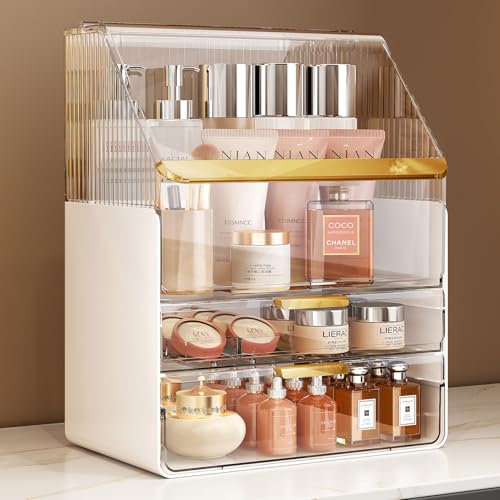
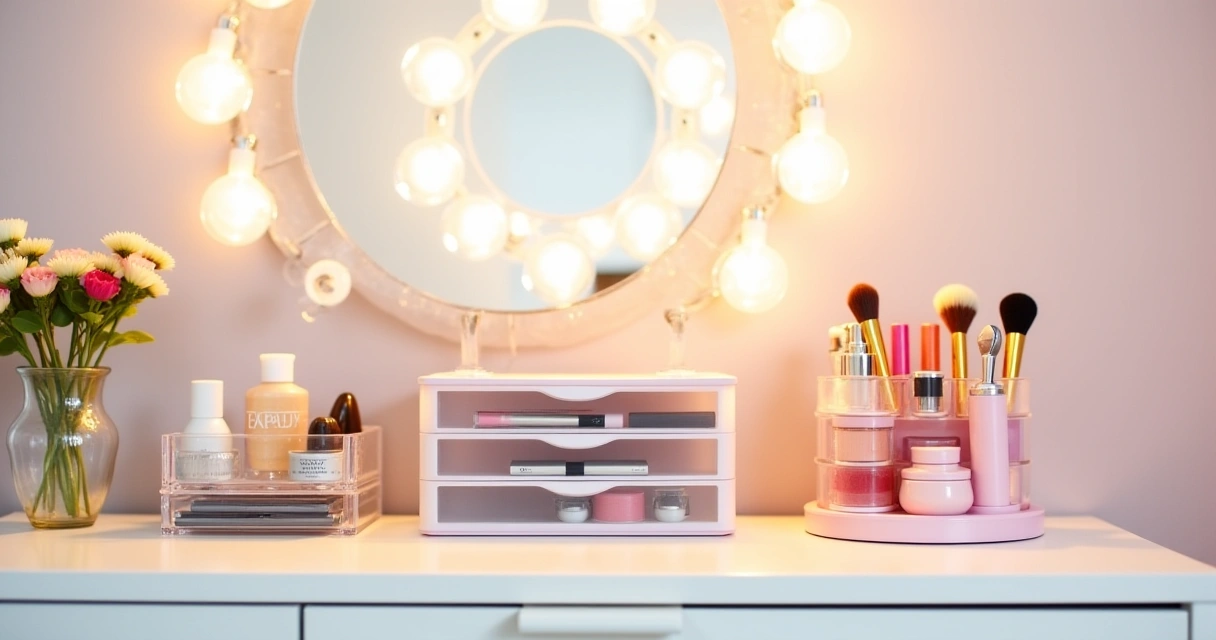
Acrylic drawer organizers and boxes are what most people picture. They're usually 2-5 compartments of varying sizes, stackable, and made from clear plastic. These are excellent for vanity desks and shelves where you can see what's inside at a glance. The honest drawback: they hold far less than they appear to in photos. A standard 5-compartment organizer that looks spacious in product pictures actually holds about 8-10 lipsticks comfortably, not 25. They're also not ideal for humid bathrooms without ventilation—moisture can collect inside and make products feel sticky. Cost range: $10-25 per organizer.
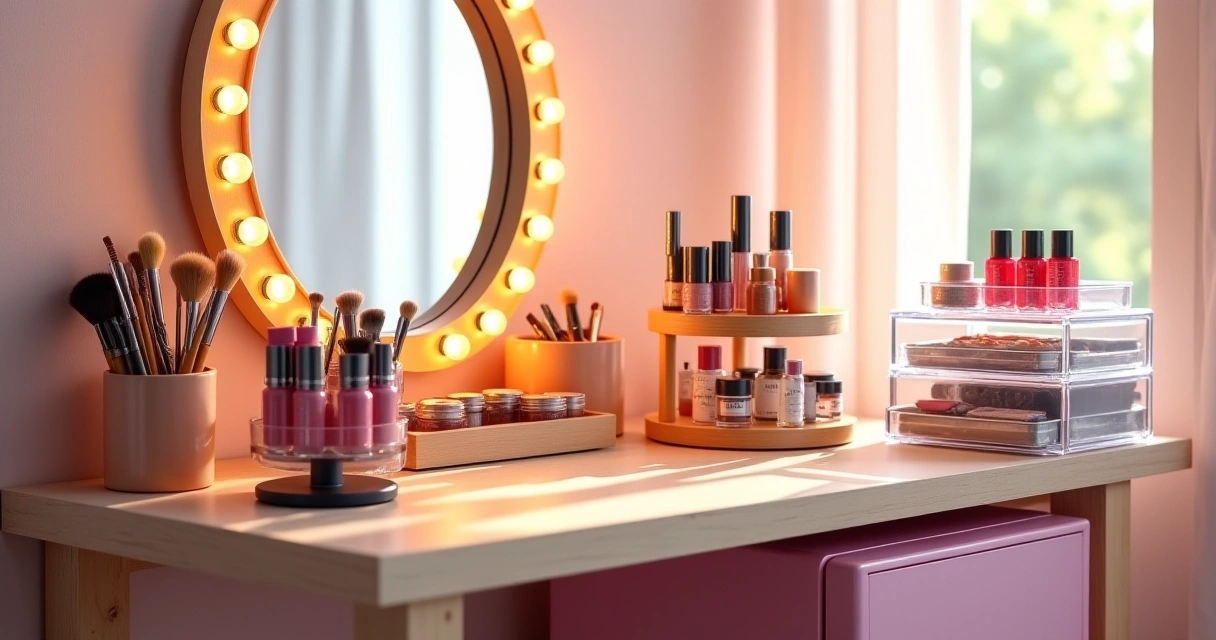
Rotating carousel organizers and turntables are brilliant for space efficiency and visibility. A 5-tier rotating organizer (typically 8-10 inches in diameter) can hold roughly 40-60 items depending on product size, and everything is visible with a quick spin. These work beautifully on smaller vanity desks where you don't have width to sprawl. The trade-off: they're less stable in tiny spaces, and if your teen is clumsy or the desk wobbles, things tip. They also look messier if items aren't consistently neat. Cost range: $20-50.
Drawer dividers and vertical organizers (including hanging wall organizers) maximize depth and hide clutter. A single drawer with good dividers can hold as much as three acrylic boxes. Wall-mounted organizers save vanity surface space entirely—crucial if you have a tiny desk or shared bathroom counter. The downside: they're less "visible shopping," meaning your teen might forget what they own. These work best when you label them or group by product type clearly. Cost range: $15-40 per unit.
Match Organizer Size to Your Space and Routine
This is where I see the most mistakes. A gorgeous 10-compartment acrylic organizer looks amazing in the product photo, but if your teen's vanity is 18 inches wide and they're right-handed with a lighted mirror already taking up space, that organizer takes over the entire desktop and nothing else fits.
Measure your actual available space first. If you have a standard vanity desk (most are 36-48 inches wide), subtract the width of the mirror or lighting (usually 16-24 inches), and subtract space for a brush holder and phone/water bottle. You're realistically left with 12-20 inches of surface width for organizers. A single rotating carousel (8-10 inches diameter) fits perfectly here. Two narrow acrylic organizers (roughly 4-5 inches each) also work. One wide organizer (8-12 inches) takes the whole space. Think about what rhythm works for your teen's routine.
For shared bathrooms or small bedrooms without a dedicated vanity desk, wall-mounted organizers are non-negotiable. A clear acrylic hanging organizer (typically 6 inches wide, 12-18 inches tall) holds surprisingly much without claiming any counter or desk real estate. I've installed these on the inside of bathroom cabinet doors, on small bedroom walls above a narrow shelf, and even on the side of a dresser. The catch: they do show dust and fingerprints more obviously than closed storage, so only use them if your teen will keep them tidy or if you're okay with a lived-in look.
Choose Materials That Work for Humid Bathrooms
If your teen's makeup lives in a bathroom or a bedroom with a humidity-prone corner (near a window, above a heater), material matters enormously. I've watched acrylic organizers become cloudy, metal hinges rust, and cardboard drawer dividers collapse from moisture.
Acrylic and polystyrene are the safest bet for bathrooms. They don't rust, absorb water, or degrade from humidity. Make sure the acrylic is at least 3-4mm thick—thinner stuff warps. Avoid organizers with metal hinges or corners unless they're anodized aluminum (usually stated in the product specs).
Plastic or vinyl drawer dividers (the insertable kind) are excellent for bathroom storage because they shed water and don't swell. Bamboo and wood organizers look beautiful but are terrible choices for humid spaces—they warp and eventually splinter. I learned this the hard way with my own daughter's setup.
For a beauty mini fridge or any organizer living near one, stick with non-fabric materials. Some organizers have fabric sides or bottoms for a prettier look, but condensation from a fridge will cause mold and mildew. It sounds extreme, but I've seen it happen. Sealed plastic or acrylic only.
Layer Your Storage System
The best teen vanity setups layer different types and sizes of organizers rather than relying on one massive unit. This gives flexibility, prevents one broken organizer from ruining the entire system, and lets you adjust as your teen's collection evolves.
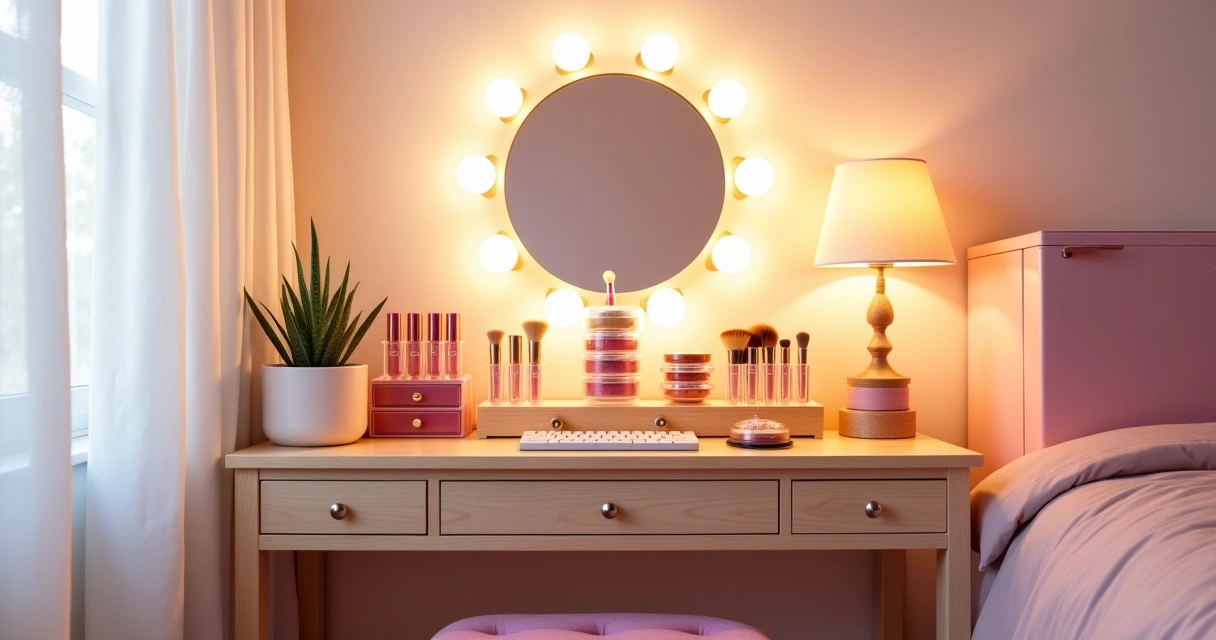
Here's a realistic example: Your teen has a small vanity desk in their bedroom (24 inches wide, 18 inches deep, with a 20-inch lighted mirror centered). On the surface, place a 10-inch rotating carousel with daily-use items: one go-to foundation, two eyeshadow palettes, favorite blush, preferred brushes, and hair clips. This takes up about 12 inches of width and half the desk depth, leaving space for a small brush cup (3-4 inches) on the other side. In the vanity drawer below, use a vertical divider organizer with three sections to hold backup foundations, additional palettes, and skincare. On the wall above or beside the vanity, mount a clear acrylic hanging organizer for brushes and nail polish. This setup gives you roughly 80-100 items of storage using three different organizer types, costs $60-90 total, and keeps everything visible and accessible without feeling cramped.
For a shared bathroom situation with no dedicated vanity, layer a wall-mounted organizer (primary daily-use items), a small clear acrylic box tucked on a shelf (overflow products), and a drawer divider in a shared bathroom drawer (backup products). This prevents your teen's stuff from taking over the whole bathroom while still giving them a functional setup.
Plan for Growth Without Overbuying
Teens' makeup interests evolve. The kid who wore mascara and chapstick in ninth grade might want a full makeup collection by junior year. Or they might go the opposite direction and pare down. Your organizing system needs room to adapt without requiring a complete overhaul every six months.
Choose modular, stackable organizers rather than one fixed large system. Two smaller rotating carousels are better than one oversized one—if your teen's collection shrinks, you remove one carousel and it still looks intentional. Acrylic drawer dividers that adjust width are better than fixed compartments. Wall-mounted organizers that let you add or remove sections give you flexibility. Avoid heavy, built-in systems that eat up space and can't be reconfigured.
Also, don't buy your full storage setup all at once. Start with what you need for the products your teen actually owns right now (usually one organizer and one drawer divider solution), use it for two weeks, then see what feels missing. This prevents investing $150 in "future storage" that ends up holding old samples and dried-out eyeliner.
See Also
Frequently Asked Questions
How do I choose the right makeup organizer for my teen's vanity?
Start by assessing what you're actually storing—makeup, brushes, skincare, jewelry—then match the organizer size to your available space and daily routine. Acrylic organizers work well for small spaces and allow visibility, while drawer dividers and tiered stands suit larger collections and vanity desks with more surface area.
What is the best type of makeup storage for a small bedroom vanity?
Vertical storage solutions like wall-mounted acrylic organizers and lighted makeup mirrors with built-in storage maximize limited space without taking up much room. For ultra-compact setups, stackable drawer organizers and rotating carousels keep items accessible while maintaining a neat appearance.
Is it worth investing in a beauty mini fridge for a teen bedroom vanity?
A beauty mini fridge is worth considering if your teen uses skincare products that benefit from cooling, like sheet masks and serums, or if they want to extend makeup longevity in warm climates. However, basic acrylic organizers and vanity desks are essential first purchases before adding specialty storage like mini fridges.
How do I organize makeup with a lighted makeup mirror?
Choose a lighted makeup mirror with built-in storage compartments or pair it with acrylic organizers placed directly on your vanity desk around the mirror's base. This keeps frequently-used products within arm's reach while the mirror's illumination helps you see exactly what you're selecting.
What are the three main types of makeup organizers?
The three primary types are drawer organizers (dividers and inserts for vanity desks), desktop organizers (acrylic stands and carousels), and wall-mounted storage (shelves and magnetic boards). Each type serves different needs based on your available space, the volume of products, and your daily beauty routine.
How should I match my makeup organizer size to my bedroom space?
Measure your vanity desk surface and wall space, then inventory your actual products to determine volume needed—avoid over-sizing or undersizing either. For small teen bedrooms, prioritize vertical storage like wall organizers and tiered acrylic stands; for larger spaces, you can incorporate multiple organizer types and even a mini fridge.