

How To Choose Lighted Makeup Mirrors For Travel
A reliable lighted makeup mirror can make the difference between fixing foundation in a dim hotel bathroom and applying it evenly before school, a flight, or a weekend self-care routine. The right travel mirror should fit your bag, show the light accurately, and survive repeated packing—not simply photograph beautifully.
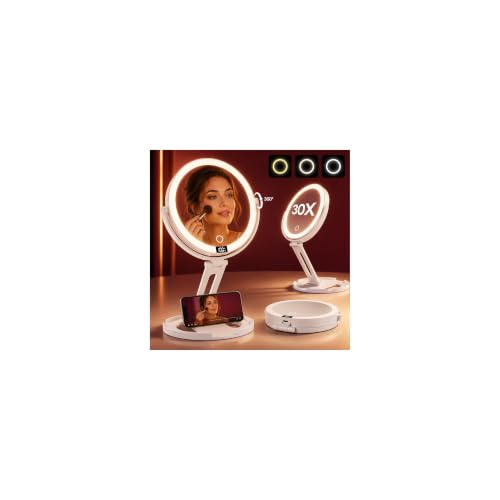
Look for a compact mirror around 10–15 cm in diameter, adjustable LED brightness, a daylight option near 5000K, and at least 5x magnification for eyeliner or brows. For frequent travel, choose a lightweight, durable model with a protective case or stand, then verify the packed dimensions and weight before buying.
“Compact” can mean very different things. Avelisse describes a typical diameter of 10–15 cm as a workable balance between portability and a usable view. That is a useful starting point, but measure the mirror in its closed state—not just the glass—because a slim-looking case can become bulky once hinges, buttons, and a protective cover are included.
Quick Answer
Table of Contents
- Quick Answer
- Our Top Picks
- Measure the mirror before you buy it
- Choose lighting that matches real-world conditions
- Pick magnification by makeup task
- Evaluate portability, durability, and power
- Match the mirror to your travel setup
- Make a practical 2026 buying checklist
- Frequently Asked Questions
- Conclusion
- Sources & References
Our Top Picks
Affiliate disclosure: if you buy through these links, we may earn a commission at no extra cost to you.


Measure the mirror before you buy it
Compare that size with the opening of your makeup bag, toiletry caddy, or overnight pouch. A mirror that fits only at the bottom of a duffel may be harder to reach during a rushed school morning or before a flight. If you use a vanity desk at home, choose a model whose folded size still works in your travel kit rather than assuming the bedroom version will travel well.
Honestly, some mirrors look substantial in product photos but provide only a narrow reflection in real life. A tiny round mirror may be easy to pack yet make it difficult to judge foundation across your whole face. For most teens carrying a school bag plus a makeup pouch, a mirror near the middle of the 10–15 cm range is usually more useful than the smallest option.
Choose lighting that matches real-world conditions
Hotel bathrooms, airplane restrooms, and poorly lit Airbnbs can make makeup look different from how it will appear outside. Avelisse recommends colour temperature around 5000K for daylight simulation, while Mirror Yard notes that travellers often prefer adjustable brightness and daylight settings to avoid cakey foundation, uneven blending, heavy bronzer, or concealer that does not match. Treat those settings as practical tools, not decorative extras.
Adjustable brightness is especially helpful when you move from a bright bedroom to a dim hotel room. Look for a control that changes the light without making the mirror flicker or forcing you to remove batteries to switch modes. A daylight setting should help you check your work, but it is still worth doing a quick look in natural light before leaving.
Check the light coverage as carefully as the bulb count. A mirror with many small LEDs can still leave shadows around the nose, jaw, or edges of the face if the bulbs are poorly placed. For a teen sharing a bathroom, consistent lighting also means fewer arguments over whether the room light is bright enough to do a full face.
Pick magnification by makeup task
Avelisse recommends standard magnification for general application and at least 5x for detail work such as eyeliner. That distinction matters because high magnification can be useful for brows and lash lines yet make ordinary foundation application feel overly close. If a product lists 2x, 3x, and 10x options, the lower settings are better for the broad view while 10x is reserved for precision.
For a small travel kit, one mirror with a switchable magnification system can replace two or three fixed mirrors. It also reduces the amount of acrylic storage or loose mirror pieces that tend to wander through a shared bathroom drawer. A teen who does quick everyday makeup may not need the strongest magnification every day, but having it available prevents rushed eye makeup from becoming a guessing game.
Do not judge magnification by the number printed on the product page alone. Confirm that the mirror actually offers the magnification you need and that switching modes is easy with one hand. A beautifully designed mirror is frustrating if the magnification button is hidden, slippery, or difficult to reach while applying makeup.
Evaluate portability, durability, and power
Portability is not just about how small the mirror looks. Avelisse advises checking weight and durability for frequent travel, and Mirror Yard describes the ideal travel mirror as lightweight, TSA-friendly, durable, compact, and bright enough for precise application on the go. A mirror that fits in a carry-on but is heavy, fragile, or difficult to pack will probably stay in the closet.
For a teen travelling with school gear, cosmetics, chargers, and toiletries, every extra ounce adds up. Look for a secure case, a stand that locks flat, or a hinge that protects the mirror during transit. If the mirror has exposed controls or a loose clip, test whether those parts can rub against makeup bottles or get damaged in a shared bathroom bag.
Power options also affect convenience. Battery-powered mirrors are easy to pack, but check whether the batteries are included and how they are accessed. If the mirror uses a rechargeable battery, confirm the charging cable length and whether it can run while plugged in if that matters for your routine. A mirror that needs a special charger may be less useful in a hotel room with limited outlets.
Match the mirror to your travel setup
A mirror that works at a full vanity desk may not work in a car, hotel room, or shared bathroom. If you apply makeup at a vanity before school, choose a travel version with a stable stand and a reflection large enough to see your shoulders and neckline when you check foundation. For weekend trips, a smaller mirror can live in the top of your toiletry bag where it is easy to grab.
Consider how the mirror will sit while you use it. A flat base is useful on a bathroom counter, while a folding stand is better for a narrow shelf or a bed nearby. If you are sharing a bathroom, a compact mirror that folds down after use leaves more room for everyone’s products and reduces the chance of it being knocked into a sink.
For a teen bedroom vanity setup, keep the travel mirror separate from your main acrylic organizers. That way, the frequently used travel piece does not get buried under palettes, brushes, skincare, or mini-fridge items. It also makes packing faster: the mirror goes in the overnight pouch, while the larger desk mirror stays where it belongs.
Make a practical 2026 buying checklist
Before ordering, write down four numbers: closed length, closed width, weight, and the diameter or height of the reflecting area. Then compare them with your bag, desk, and storage basket. A mirror may look perfect beside a vanity in a photo but take up most of a small bathroom shelf or crowd a teen’s limited drawer space.
Next, check the lighting and magnification settings rather than relying on the product name. Look for adjustable brightness, a daylight option near 5000K, and at least 5x magnification for detail work. If the listing gives a bulb count, use it only as one detail; light placement, brightness control, and colour temperature matter more to the final result.
Finally, check the return policy and packaging before buying. A mirror that arrives cracked, feels flimsy, or cannot be switched off easily is a poor value even when the price is attractive. For parents watching the budget, a slightly more expensive mirror with a protective case and replaceable or rechargeable power may save money better than a cheap model that breaks after the first trip.
Frequently Asked Questions
How small should a travel makeup mirror be?
For most travellers, a mirror around 10–15 cm in diameter offers a better balance of portability and usable reflection. Measure the closed case and compare it with your makeup bag before buying.
What magnification is best for eyeliner and brows?
Use standard magnification for general makeup and at least 5x for detail work. A switchable mirror with lower and higher settings is more space-efficient than packing separate mirrors.
What colour temperature should I look for?
A daylight setting around 5000K is a useful reference for simulating natural light. Adjustable brightness helps when you are moving between a bright room and a dim hotel or bathroom.
Are lighted mirrors allowed in carry-on luggage?
Most basic lighted mirrors are not inherently restricted, but batteries, rechargeable cells, and the final packed size can affect airport rules. Check your airline’s current guidance and pack the mirror where it can be accessed easily.
Should I choose battery power or rechargeable power?
Battery power is convenient for short trips and places with few outlets. Rechargeable power can be better for frequent use if the cable fits your travel kit and the mirror remains usable while charging.
What makes a lighted mirror too small in real life?
A tiny mirror may look cute in photos but show only part of your face, making foundation, blush, and concealer harder to judge. Check the actual reflecting area, not just the case size or product image.
Conclusion
The best travel mirror is the one that fits your bag, gives you a useful view, and produces light close enough to daylight to trust. Measure your makeup pouch, confirm the mirror’s closed size and weight, then choose adjustable LED lighting, daylight simulation, and the magnification you actually use before packing it for the next trip.


