

how to build a compact teen bedroom vanity setup with mirror and storage for prom
If you've got a teen who's obsessing over prom prep—or just wants a dedicated space to do their makeup without tying up the family bathroom—a bedroom vanity setup is a game-changer. I've helped my own kids and several friends' teens create functional, Instagram-worthy vanities in spaces as tight as 4x6 feet, and I can tell you: it's absolutely possible without breaking the bank or sacrificing usability. The key is choosing the right mirror, smart storage that actually holds what you need, and lighting that doesn't make you look washed out at 7 a.m. before school.
Our Top Picks
Affiliate disclosure: if you buy through these links, we may earn a commission at no extra cost to you.

IDEALHOUSE Vanity Desk with Mirror and Lights, 3-Fold Vanity Mirror with Lights Makeup Vanity with Charging Station, Corner Vanity with Acrylic Door Cabinet, Hanging Storage Bag & Stool, Tigerwood
$149.99Check Price
This guide walks you through every decision I've made (and mistakes I've learned from) when setting up a teen bedroom vanity. Whether you're working with a tiny dorm-size room or a generous corner space, I'll give you real dimensions, storage capacities, and honest reviews of products that look amazing in photos but fail in real life. Let's build something that actually works.
Table of Contents
- Start with the Vanity Desk: Size, Depth, and Drawers Matter
- Lighting That Actually Works: Mirror Lights vs. Ring Lights vs. Overhead
- The Mirror: Finding the Right Width and Magnification
- Storage Strategy: Acrylic Organizers, Drawers, and the Mini Fridge Question
- Final Layout and Space-Saving Hacks for Tiny Rooms
- Frequently Asked Questions
Start with the Vanity Desk: Size, Depth, and Drawers Matter
Your vanity desk is the foundation, and here's what I've learned: a desk that looks proportional in a showroom will feel cramped in a 10x10 bedroom. The sweet spot for a teen bedroom vanity is 36-48 inches wide and 18-24 inches deep. Anything narrower than 36 inches and you won't have room for a mirror, a makeup organizer, and space to actually apply makeup without knocking things over. Anything deeper than 24 inches eats up floor space you probably don't have.
Drawers are non-negotiable. I made the mistake of suggesting a desk with just a shelf to one of my kids, and within two weeks, makeup palettes, brushes, and hair products were scattered across the top and floor. You need at least one deep drawer (4-6 inches) for larger items like hair tools and palettes, and 2-3 shallow drawers (2-3 inches) for everyday products. Real scenario: during prom prep season, my daughter was rummaging through 40 minutes of clutter looking for her foundation. A labeled drawer system cuts that to 30 seconds.
Budget-wise, a solid vanity desk with good drawer quality runs $150-$350. I've found that mid-range options at Wayfair, Target, and Amazon (brands like Nathan James, Tribesigns) hold up better than ultra-cheap options and cost way less than high-end furniture. Look for desks with metal drawer slides rather than plastic—they actually stay aligned after six months of daily use.
Lighting That Actually Works: Mirror Lights vs. Ring Lights vs. Overhead
Bad lighting is the silent killer of a teen vanity setup. I cannot stress this enough: a beautiful mirror with poor lighting will make your makeup look terrible, and then you'll redo it five times before school. You need lighting that mimics natural daylight (around 4000-5000K color temperature) and is positioned so it hits your face directly, not from above or the side.
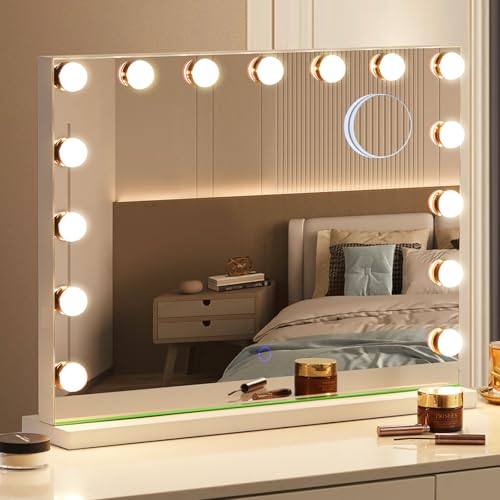
Here are your realistic options: Lighted vanity mirrors with built-in LEDs are my top pick. Look for mirrors that are 18-24 inches wide with at least 12-15 LED bulbs (more bulbs = more even light). These run $60-$150 and come in styles ranging from Hollywood-glam to minimalist. The bulbs typically last 50,000 hours, so roughly 15 years of daily use. Pro move: choose dimmable models so your teen can adjust brightness depending on time of day. A 7 a.m. makeup application needs different lighting than weekend glam, and being able to dial it in prevents harsh shadows or over-application.
Ring lights are trendy and work if you're primarily filming makeup tutorials or taking selfies, but they're overkill for a morning makeup routine and take up desk space. Overhead ceiling lights or wall sconces alone are never enough—they create shadows under the eyes and nose, which is exactly why bathroom makeup disasters happen.
The reality check: a lighted mirror with 12-15 LEDs positioned 18-24 inches from your face provides professional-grade lighting for makeup application. Combine it with a small clip-on desk lamp on the opposite side if your room is naturally dark, and you've got setup most makeup artists would be happy with.
The Mirror: Finding the Right Width and Magnification
The mirror is where most people get it wrong. They buy a small, cute mirror that looks proportional on Pinterest, then realize they can't see their whole face while applying makeup. For a teen bedroom vanity, you want a primary mirror that's 20-24 inches wide minimum. This lets your teen see their entire face and most of their neck/shoulders, which matters when doing foundation, contour, or anything that needs to blend down to the collarbone.
On magnification: a standard (1x) mirror is what you need for your main mirror. Yes, magnified mirrors are helpful for detailed work like eyeshadow or eyeliner, but if your primary mirror is magnified, everything looks distorted and too close. Save the magnification for a small 7-10 inch supplementary mirror (5x or 10x magnification) that sits on the desk for detail work. My daughter uses her 10x mirror only when doing winged eyeliner; for everything else, she uses her main 22-inch lighted mirror.
If you're buying a lighted vanity mirror, check that the actual reflective surface is at least 20 inches wide—don't count the frame. I've seen "24-inch mirrors" that are only 18 inches of actual mirror with a 3-inch decorative frame on each side. Read the product specifications carefully. Brands like Impressions Vanity, Fenchilin, and Hansong are reliable; the mirrors have real glass (not plastic) and accurate sizing descriptions.
Storage Strategy: Acrylic Organizers, Drawers, and the Mini Fridge Question
Storage is where the vanity actually becomes usable versus just pretty. Acrylic organizers are essential because they're transparent (you can see what's inside), stackable, and don't take up much visual space. Here's what I recommend: one large 4-compartment acrylic organizer for palettes and pressed powders ($15-25), one rotating carousel organizer for lip products and smaller items ($20-35), and two vertical brush holders ($10-15 each). This setup handles roughly 60-80% of a teen's makeup collection without overwhelming the desk.
Be honest about sizing: those tiny cute acrylic drawers look adorable but hold maybe 5 lip glosses. I learned this the hard way. A typical teen with a casual makeup routine has 15-25 lip products, 8-12 eye palettes, and dozens of brushes. Your storage needs to actually accommodate real collections, not Instagram collections. Go for larger organizers that don't look as cute in photos but are genuinely functional. A 4-compartment organizer that's 10x12 inches holds far more than four tiny stacked organizers that look cuter on TikTok.
The mini fridge question: honestly? Only worth it if your teen is serious about skincare and wants to keep sheet masks, face serums, or moisturizers cold. A small beauty mini fridge runs $40-80 and takes up valuable floor or shelf space. If your teen's routine is makeup-focused rather than skincare-focused, skip it. If they love face masks and serums year-round, it's actually convenient and shows they're committed to their routine. I have one in my bathroom for myself but wouldn't put one in a teen's bedroom unless they specifically asked and had space for it.
Final Layout and Space-Saving Hacks for Tiny Rooms
Now let's talk about the actual layout. If you're working with a tight space (many teen bedrooms are), here's what works: position your vanity desk perpendicular to the wall or in a corner, not taking up an entire wall. This leaves your teen floor space to move around, open drawers fully, and prevents that cramped feeling. A 48-inch desk in a corner takes up roughly 12 square feet of floor space, which is manageable. The same desk along an entire wall feels suffocating.
Height matters too. A standard vanity desk is 30-32 inches tall, which is lower than a standard desk. This is intentional—it prevents your teen from hunching over while applying makeup. If your teen is taller (5'8"+), they might prefer a desk that's 32-34 inches tall. I learned this when my son, who's 6'2", complained that our 30-inch vanity desk made his shoulders hurt. We swapped it for a 34-inch model, and the problem solved.
For tiny rooms (under 100 square feet of usable space), consider a wall-mounted floating vanity desk instead of a freestanding one. A 36-48 inch floating desk takes up zero floor space visually and is perfect for a bedroom that doubles as a study area. Mount it 28-30 inches off the ground, and you've got a functional vanity that doesn't dominate the room. The trade-off: floating desks typically have less drawer storage, so you'll need to rely more on shelving or wall-mounted organizers above the desk.
Final layout checklist: Is the vanity positioned where natural light comes in during morning hours? Is the electrical outlet accessible without a crazy-long cord or extension? Is there 24 inches of clear floor space in front of the vanity so your teen can pull out a chair and move around comfortably? Can you open all desk drawers fully without them hitting the wall or bed? These seem obvious, but I've helped friends arrange vanities in tight spaces where one of these factors was overlooked, and it made the whole setup less functional.
Frequently Asked Questions
How do I choose the right size vanity desk for a small teen bedroom?
Measure your available floor space and aim for a desk that's 36-48 inches wide with 12-16 inches of depth to accommodate a mirror and basic storage without overwhelming the room. Consider wall-mounted or corner vanities to maximize space in compact bedrooms while still providing enough surface area for makeup application and organization.
What is the best lighting for a bedroom makeup vanity?
Lighted vanity mirrors or ring lights provide the most flattering, shadow-free illumination for makeup application, though overhead lighting can supplement these. Aim for daylight-balanced bulbs (5000K color temperature) to ensure makeup looks good in natural light, not just under artificial lighting.
How do I organize makeup and beauty products in a small vanity setup?
Use acrylic organizers, drawer dividers, and tiered storage solutions to maximize vertical space and keep products visible and accessible. Consider adding a small beauty mini fridge for skincare and a wall-mounted shelf above the vanity desk to store frequently-used items without cluttering the work surface.
Is it worth buying a vanity mirror with magnification for makeup application?
Yes, magnification mirrors (typically 5x or 10x magnification) are valuable for precise makeup application, especially for detailed work like eyeliner or eyebrows. However, pair it with a regular 1x mirror to see your full face and ensure your makeup looks balanced from a normal viewing distance.
What mirror width should I choose for a teen bedroom vanity?
A mirror that's 24-36 inches wide is ideal for most teen vanities, allowing them to see their full face and shoulders for makeup and outfit checking. Ensure it's mounted at eye level when seated, typically 24-30 inches from the vanity desktop surface.
How do I set up a vanity that fits prom prep needs without taking up too much space?
Choose a compact vanity desk with built-in drawers, add a lighted mirror to save counter space, and use vertical storage like wall shelves and acrylic organizers for makeup, hair tools, and accessories. This allows your teen to have everything needed for getting ready in one dedicated, efficient space.
🛒 Relevant Products for This Topic
Affiliate disclosure: if you buy through these links, we may earn a commission at no extra cost to you.
IDEALHOUSE Vanity Desk with Mirror and Lights, 3-Fold Vanity Mirror with...
$149.99
View Product Details →Amifiy Hollywood Vanity Mirror with Lights, 23"x18" Lighted Makeup Mirror...
$43.99
View Product Details →FENNIO Vanity Mirror with Lights 13'' x 17'' Makeup Mirror with...
$19.99
View Product Details →

